
Virginia's new public pool rules: what's changing and when
Virginia now has to write statewide operating rules for every public pool. Who is covered, what the law says, the dates, and what to do now.
By David McLaughlin · · 4 min read
If you run a pool in Virginia, you may have gotten an email from your local health department asking you to fill out a short survey for the Virginia Department of Health. It's worth the two minutes. It's the first step toward statewide operating rules for every public pool in the state, and the survey is how VDH builds its list of who to tell.
The short version. The law changed on July 1, 2026. VDH is writing the rules now, and nothing new applies to your pool yet. Public comment opens November 16 and the survey closes December 31.
What changed
Until this year the state could do very little at most pools. Unless a pool belonged to a hotel, campground or summer camp, VDH could require one thing: test the water at least once a day and post the results (free chlorine or bromine, pH and temperature) where swimmers can see them. There were no state permits and no set inspection schedule. About 19 cities and counties, mostly wealthier and tourist areas, wrote their own pool codes to fill the gap.
House Bill 222, from Delegate Patrick Hope, changed that. It amended section 32.1-248.1 of the Code of Virginia and took effect July 1, 2026. The State Board of Health now has to write rules for:
- Water treatment and disinfection
- Posting water quality results
- Safety equipment and features
- Maintenance and safety of equipment and the premises
- Operating requirements
- Staffing
- Incident response
The rules can't cover how pools are designed or built, or the structures and equipment the building code already governs. And a city or county can keep, or pass, rules that are stricter than the state's.
Who it covers
VDH says the rules are for public aquatic facilities of every kind:
- Swimming, wading, wave and surf pools, and lazy rivers
- Hot tubs and therapy pools
- Splash pads
- Pools at apartments, condos, homeowner associations and private clubs
Swim schools and gyms are in too. The coordinator who runs VDH's pool program told WTVR that anything that counts as a public aquatic venue will be subject to the rules. Backyard pools at single-family homes are not, and neither are lakes, rivers or the ocean.
The timeline
- July 1, 2026. The law took effect.
- October 20, 2026. The Governor approved VDH's notice that it will repeal the two current pool chapters (12VAC5-460 and 12VAC5-462) and replace them with one new chapter, 12VAC5-461.
- November 16, 2026. The notice is published and a public comment forum opens on Virginia Regulatory Town Hall.
- December 16, 2026. The comment forum closes.
- December 31, 2026. VDH's aquatic facility survey closes.
- After that. VDH and a workgroup of owners, operators and others draft the actual rule text. It goes out for another round of public comment, with a public hearing, before anything is final.
There's no draft text yet. Anyone who tells you exactly what the new rules will require is guessing.
What the rules are likely to look like
VDH has said where it will start. In a 2023 review it said it would use the CDC's Model Aquatic Health Code and the national standards for running public pools as the starting point for the workgroup. The same review listed what it couldn't require before and wanted to: clear enough water to see someone on the bottom, a plan for fecal accidents, lifesaving equipment such as a reaching pole, safe chemical storage and handling, general hazards around the pool, and water quality at splash pads.
That's a guide to where things are heading, not a promise. The workgroup and the comment period will shape the final text.
What to do now
- Fill out the survey. It asks for your contact details, location and type of facility, and puts you on VDH's list for updates. Take the VDH survey.
- Comment if you have something to say. Owners and operators know what's practical at a real pool. The forum on Town Hall is open November 16 to December 16.
- Get your records in order. Whatever the final rule says, an inspector will want to see your daily water tests, your maintenance history and what you did when something went wrong. If those live in a binder in the pump room, now is a good time to fix that.
- Check your local code. If your city or county has its own pool ordinance, it still applies. Fairfax County, for one, requires a certified pool operator on site whenever a pool is open.
Where HydroPM fits
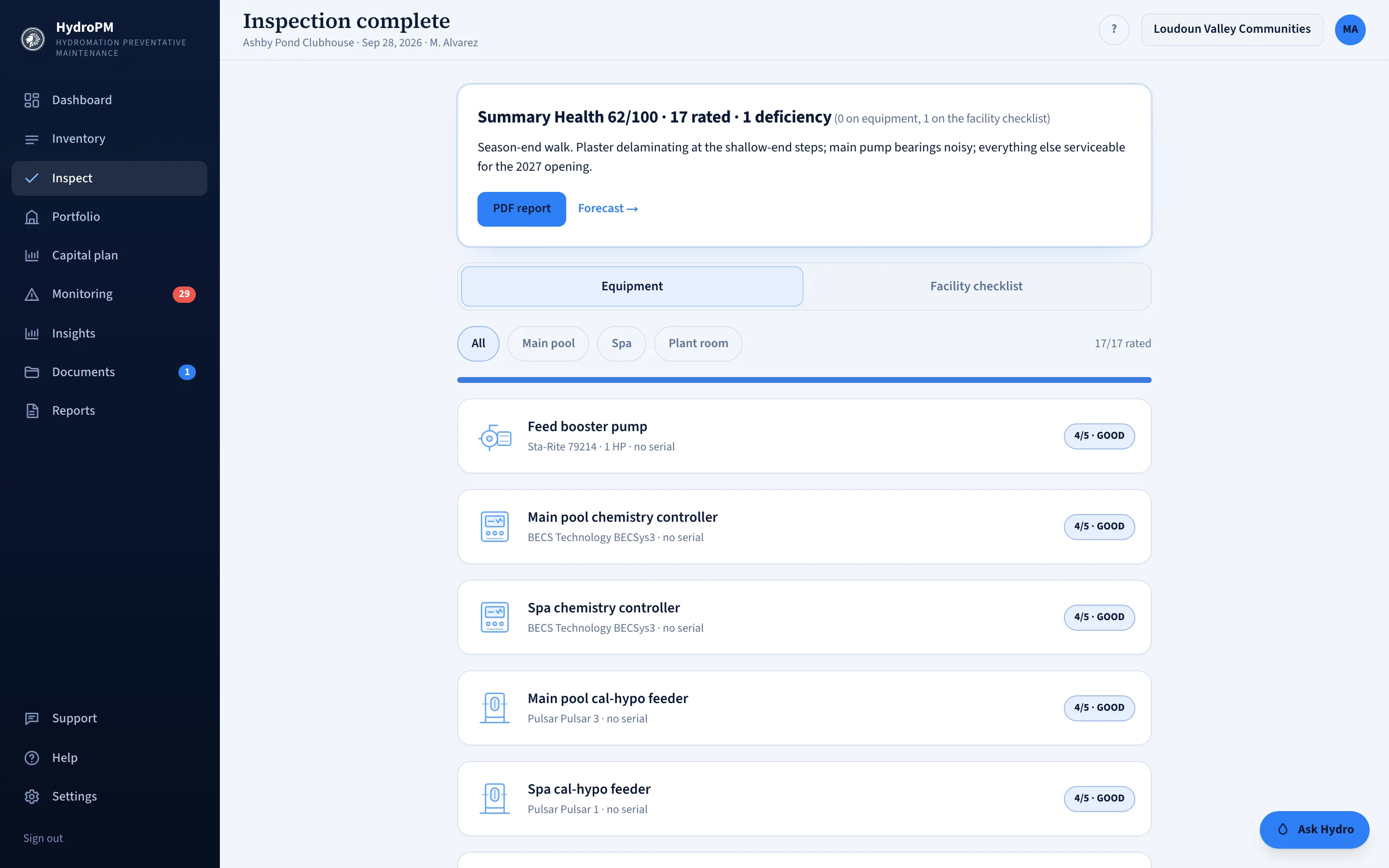
We built HydroPM for the people who own and run commercial pools. For each pool it keeps the daily water readings, the equipment record, inspections and every service visit in one place, dated, with the paperwork attached. Our facility checklist already flags what a health inspector looks at: drain covers, safety and first aid equipment, chemical storage, signage, fences and gates.
 (opens the full-size picture)
We'll update this post when VDH publishes draft text, and we'll lay what it asks for next to what HydroPM records, so you can see what's covered and what isn't. Questions about your own facility? Get in touch.
Sources
- VDH: Upcoming changes to public pool regulations
- Virginia Regulatory Town Hall: notice of intended regulatory action, 12VAC5-461
- Code of Virginia, section 32.1-248.1
- HB 222, 2026 session
- 12VAC5-462, posting of water quality results
- VDH 2023 review of illness, injury and death prevention at public aquatic facilities (PDF)
- WTVR, June 26, 2026: 97 kids have drowned in Virginia since 2021
- Fairfax County: pool operator requirements