
Fix it before it breaks.
Most pool equipment is run until it stops, then replaced at emergency prices while the pool is closed. HydroPM keeps every unit on a schedule instead: inspected, serviced and watched, so the repair happens while it is still a repair.
Break and fix, or prevent and plan.
The equipment is the same either way. What changes is who knows about it, and when.
| What | Break and fix | With HydroPM |
|---|---|---|
| The record | A binder, a spreadsheet, or what the technician remembers. | Every unit with its make, model, serial number, install date, photos and history. |
| Service | Done when someone thinks of it. | Each visit logged against the unit, with the date the next one is due. |
| Problems | Found the day the pool closes. | Flagged at the inspection, with a reason and a recommendation. |
| Parts | Ordered after the failure. A commercial heater can take 14 to 16 weeks to arrive. | Ordered ahead, because the replacement window is already on the page. |
| The budget | An emergency request in the middle of the season. | A line that was on the capital plan before anything failed. |
| Who knows | Whoever was in the room that day. | Everyone on the account, at a desk or on a phone in the pump room. |
What goes on the schedule.
One record per unit
Every pump, heater, filter, drive, UV system and chemistry controller, with its make, model, serial number, install date, warranty and photos. Maintenance starts with knowing what is in the room.
Inspections
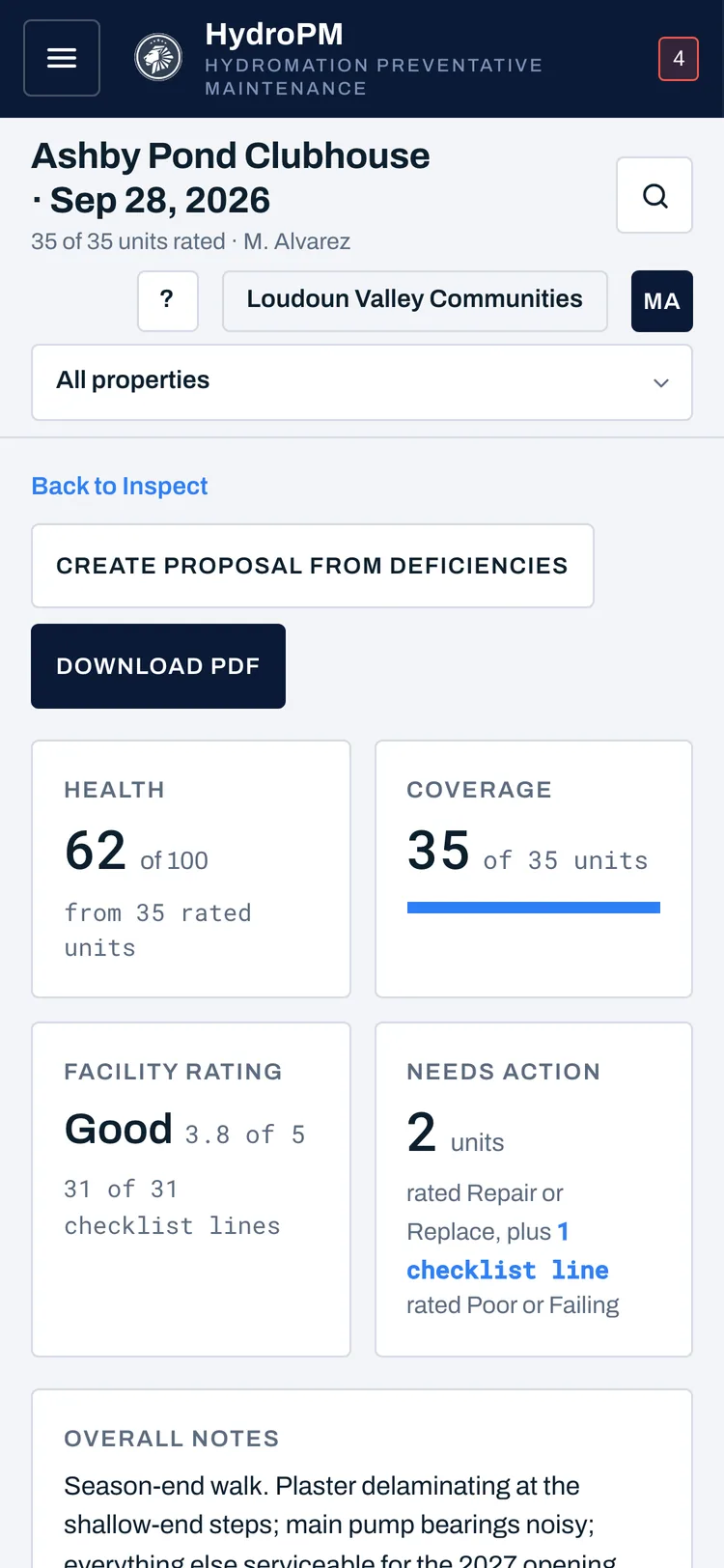
A technician walks the room with a phone and rates each unit from one to five, with a recommendation: good, monitor, repair or replace. A deficiency gets a note and a photo. A property that goes twelve months without an inspection raises an alert.
Service that does not slip
Each service visit is logged against the unit: what was done, the parts, the cost, who did it, and the date the next service is due. When that date passes, the unit shows as overdue. Visits found in the service reports you already get are read in for you to confirm.
Alerts with a reason
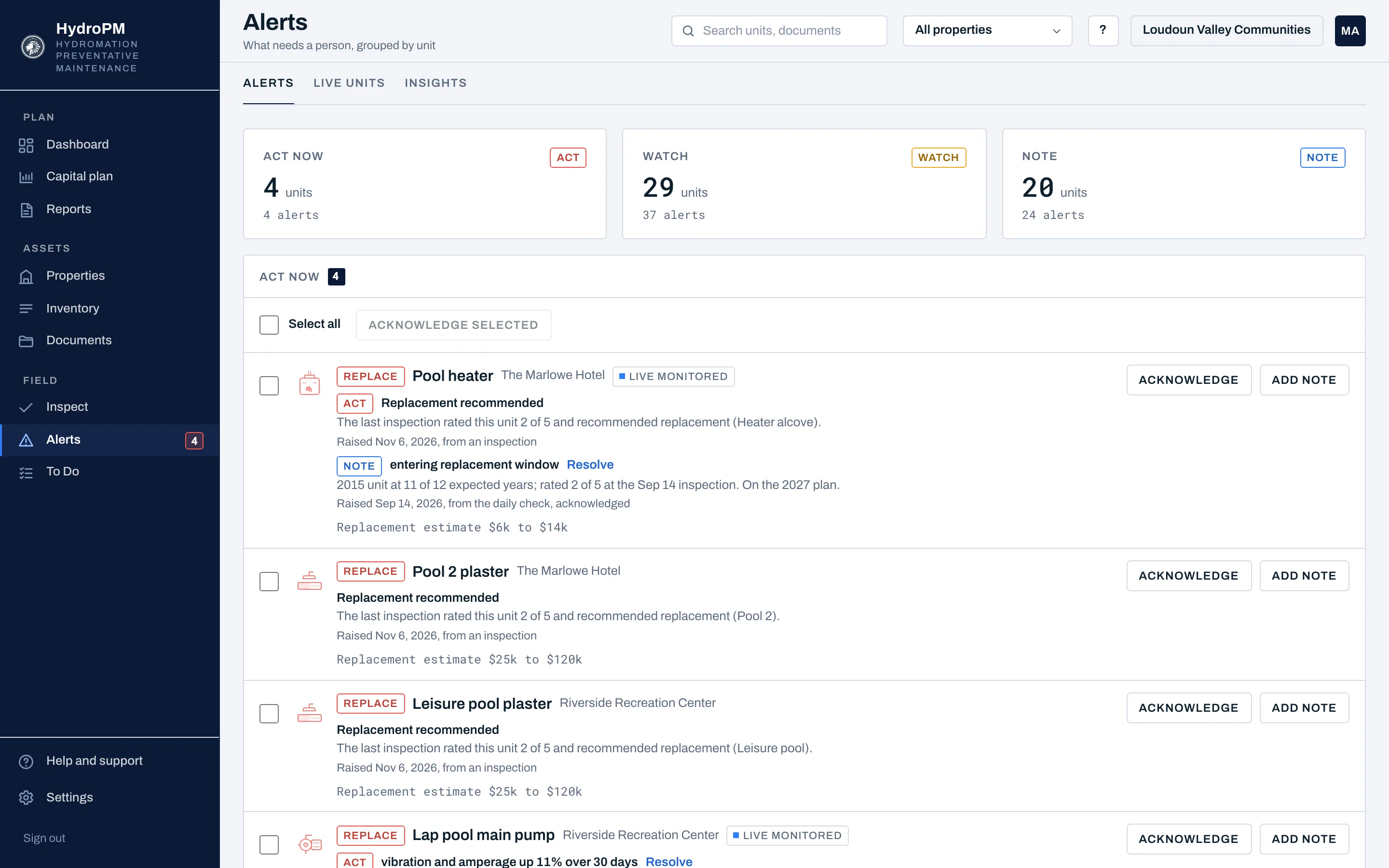
Every alert is marked Act, Watch or Note. A unit rated for repair, past its expected life or overdue for service is flagged with why. Email goes to the people you choose, right away or as one daily digest.
A To Do list
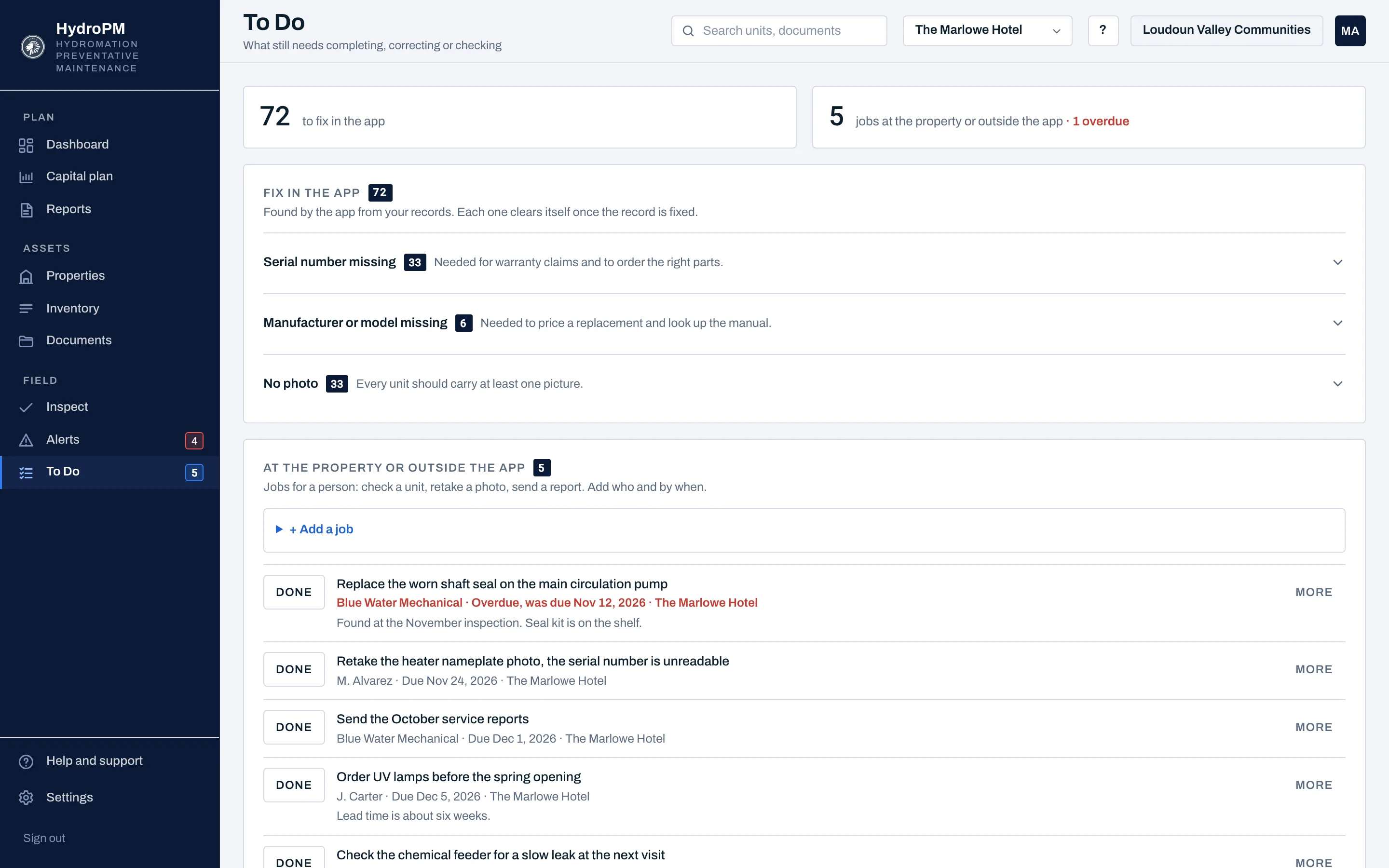
The gaps HydroPM finds in the record, such as a missing serial number or a photo to retake, sit beside jobs for a person, each with a name and a due date. Overdue jobs go to the top.
Warranties and permits
A document with an end date is listed 90 days before it runs out, so a warranty claim or a permit renewal is not found out about afterward.
The maintenance matrix.
What a preventative schedule covers, system by system: the task, how often, and the part that wears out first. These are typical intervals for a commercial pool. The manufacturer’s manual and your health department set the real ones, and HydroPM holds the date each unit is next due.
Filtration
Regenerative media filterMonthly
Inspect the vessel, valves and gaskets. Check the regeneration cycle. Record the pressure differential and flow.
Act when the differential climbs about 10 psi over clean.
Regenerative media filterTwice a year
Chemical deep clean of the filter elements to strip oils and scale, then fresh media.
Sight glass, gauges and gaskets on the manufacturer’s schedule.
Sand filterBackwash as needed, open it yearly
Backwash when the gauge calls for it. Open it to check the sand bed, laterals and air relief.
Sand every 5 to 10 years. Steel tanks relined about every 10.
Strainer (hair and lint)Every visit
Empty the basket. Check the lid gasket and that the lid seals.
Basket and gasket are consumables.
Circulation
Circulation and feature pumpsMonthly
Inspect seals, impeller and bearings. Record suction and discharge pressure and amp draw. Check the electrical connections.
Mechanical seals every 12 to 18 months.
Variable frequency driveQuarterly
Read the fault history. Clean the cooling fan and filter. Check the speed against the flow the pool needs.
Cooling fans are the wear part.
Flow meter and gaugesMonthly
Compare the reading with what the pump should deliver. Clean the sensor.
Replace any gauge that does not return to zero.
Disinfection
UV systemMonthly
Clean the quartz sleeves. Check lamp intensity and the sensor. Test the safety interlock.
Lamps at the manufacturer’s hour limit. Sleeves about every 2 years.
Chlorine feeder (tablet or liquid)Monthly
Inspect and clean the feeder, venturi and screens. Set the feed rate for the season’s demand.
Tubing, injectors and check valves as they wear.
Chemical feed pumpsMonthly
Check the tube or diaphragm, the injection point and the fittings for leaks. Confirm the pump is delivering.
Squeeze tubes and diaphragms are consumables. Change at the first crack.
Water chemistry control
Chemistry controller and probesMonthly
Calibrate the pH and ORP probes against a hand test. Clean the flow cell. Check the relays and feed lockouts.
Probes every 1 to 2 years.
CO2 or acid feedMonthly
Check the regulator, solenoid and tubing. Leak test the connections. Read the tank level.
Regulators about every 5 years. Tank relief valves verified every 2.
Heating and air
Pool heaterTwice a year, before the season
Clean the burners and heat exchanger. Test gas pressure, ignition and the safety controls. Check venting and the condensate drain.
Gaskets and flame sensors on the manufacturer’s schedule.
Pool heaterMonthly
Check the temperature rise across the heater and that the flow switch trips.
A rise outside the nameplate range points to scale or a flow problem.
Room ventilation and dehumidifierQuarterly
Change the filters. Clean the coils. Check belts and condensate drains.
Filters are consumables. Corrosion in the room starts here.
Pool, deck and safety
Main drains, skimmers and guttersEvery visit
Confirm every drain cover is in place, tight and unbroken. Clean the skimmer baskets and weirs.
Drain covers by the date marked on the cover, usually 5 to 7 years.
Autofill and water meterEvery visit
Check that the fill valve holds the level and shuts off. Read the meter.
A meter that climbs between visits is the first sign of a leak.
Shell, waterline tile and jointsMonthly
Inspect the finish, tile and expansion joints. Clean the scum line.
Joint sealant every 5 to 7 years. Plaster about every 10.
Deck and deck drainsEvery visit
Walk the deck for trip edges and cracks. Clear the drains and any standing water.
Note cracks with a photo so the next visit can compare.
Ladders, handrails and ADA liftMonthly
Check anchors and bonding. Run the lift through a full cycle and check its battery.
The lift battery and actuator are the wear parts.
Underwater and area lightsMonthly
Check lenses and gaskets. Trip test the ground fault protection.
A fixture that takes on water comes out of service that day.
Slides, diving boards and featuresMonthly in season
Inspect the structure, fasteners, joints and steps. Check the feature pump.
A yearly inspection where the state requires one.
The manufacturer’s schedule, kept
Service done when the maker calls for it, with a dated record against the unit, is what a warranty claim asks for.
Paper for the inspector
Every inspection and service visit is dated and on file, with the readings and the photos, ready for a health inspection or an audit.
A forecast instead of a surprise
The same visits tell the capital plan how each unit is aging, so the replacement is budgeted before the part is on back order.
What it looks like.
Screens from a demo account. Names and figures are examples. Click any of them to see it full size.
Maintenance is what keeps the capital plan honest.
Every inspection and every service visit moves a unit’s remaining life. A unit that is looked after and rated five runs past its book life, and its replacement moves out. Two or more repairs in twenty-four months pull it in. When repairs on a unit start to add up against what a new one costs, it moves up the list.
HydroPM does not dispatch technicians or write work orders, and it does not connect to controllers directly yet. It is the record that tells you and your service company what is due, and why.
How the forecast is built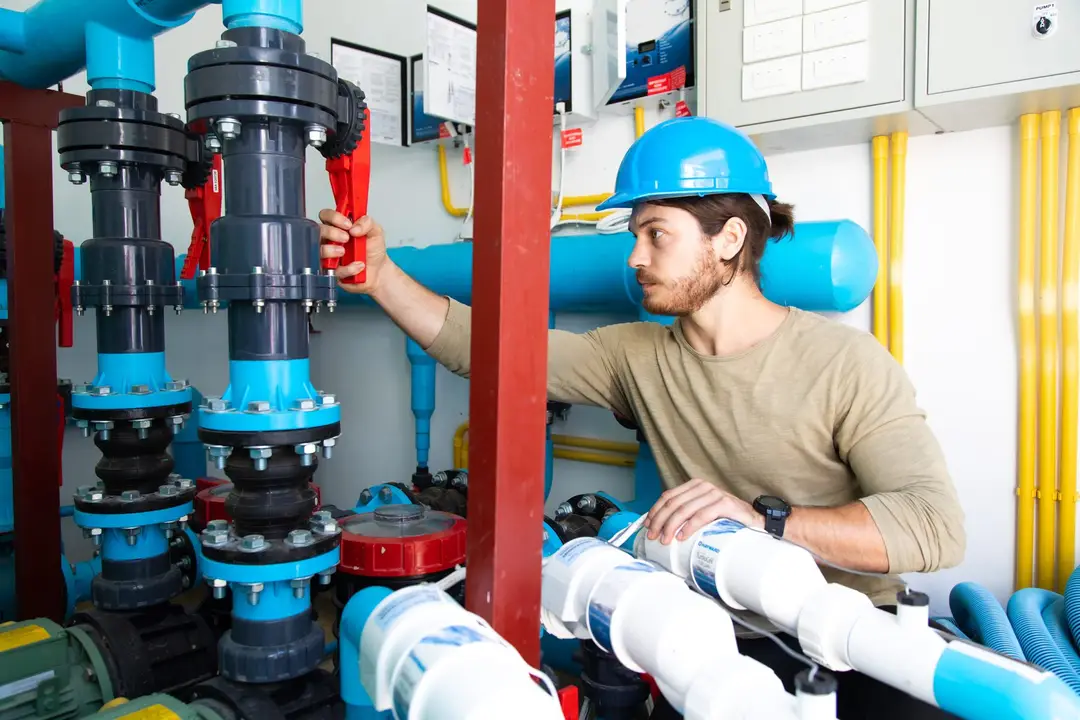
Start with one plant room.
Request an assessment